
Momentum: Timor-Leste forges a vibrant future
Voice
How do you build a nation from the ashes of conflict? You express your voice
Freedom of expression fosters a democratic culture.
The voice of East Timor was heard around the world on 30 August 1999 when its people overwhelmingly voted in the Popular Consultation to become an independent nation. Since that act of self-determination, the voices of Timor-Leste’s citizens have grown stronger.
The expression of voices began for some with a great listening which unfolded when more than 8,000 people who suffered during the conflicts of 1974-1999 shared their stories with the Timor-Leste Commission for Reception, Truth and Reconciliation. No longer afraid to express themselves in their own country, the nation’s poets, singers, painters, graffiti artists and others voiced their pain, anger, ideas and aspirations. National television and radio broadcasters, community radio stations and independent newspapers grew. Today, they communicate primarily in Tetum and Portuguese, the country’s official languages.
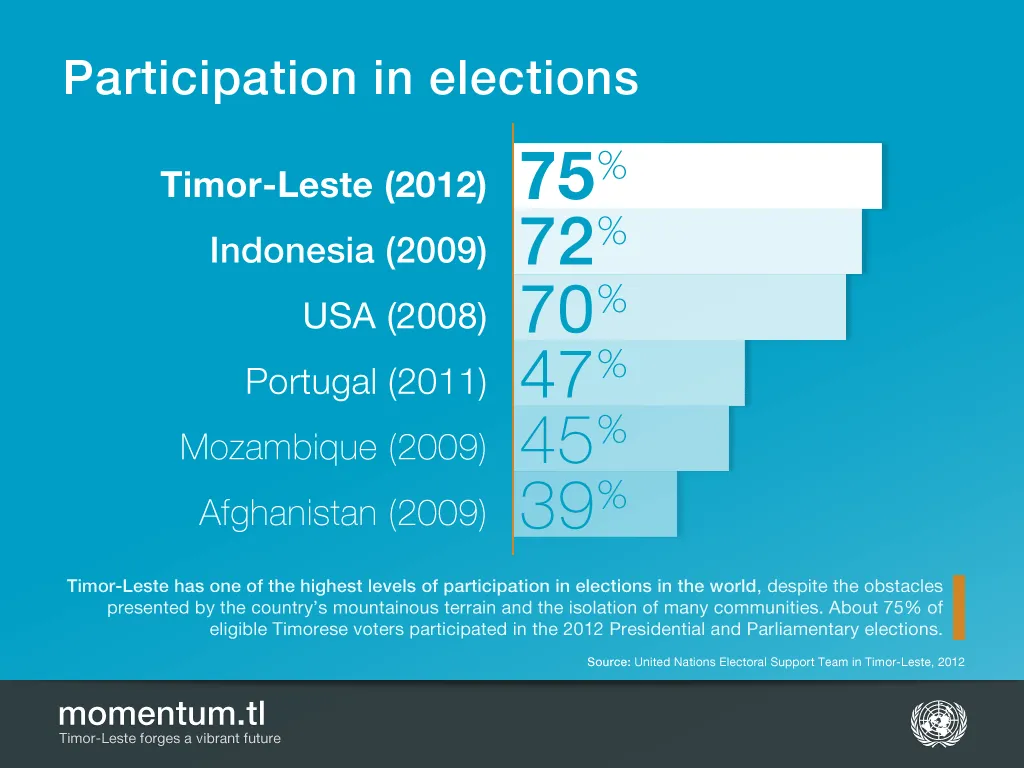
This freedom of expression is the basis for an emerging democratic culture. Participation in elections is among the highest in the world, despite the barriers to travel posed by the geographic isolation of many communities. Prisoners have the right to vote, not a standard practice in all countries. Special election observers with disabilities help to ensure that other people with disabilities are able to vote.
Women and children, who often suffer the greatest harm in societies torn by conflict, are engaged in Timor-Leste’s national processes for peace and stability. Women’s voices are heard in the parliament where they hold 38 per cent of the country’s seats – the highest level of female representation in Asia.
Young people are represented in an innovative youth parliament pilot programme that engages 130 young women and men from every district in the country. This is one way Timor-Leste gives a voice to the youth who suffered the tragedies of conflict and were set back by the breakdown of infrastructure and systems.